Why Your Lab Needs Pharmaceutical Compliance Management Software | Valkit.ai
Why Your Lab Needs Pharmaceutical Compliance Management Software
Discover why your lab needs pharmaceutical compliance management software to meet 2026 standards, boost efficiency, and reduce risk.
Steve Ferrell·
Why Pharmaceutical Compliance Management Software Is No Longer Optional in 2026
Pharmaceutical compliance management software is a purpose-built digital platform that helps drug manufacturers, biotech firms, and life science organizations meet regulatory requirements — from FDA and EMA to GMP and 21 CFR Part 11 — by automating documentation, audit trails, training tracking, and risk management in one centralized system.
Here's what it does at a glance:
Function What It Solves Document control Eliminates version confusion and manual filing Audit trail automation Ensures 21 CFR Part 11-ready records at all times Training management Tracks staff compliance with role-based requirements CAPA workflows Closes gaps faster with automated corrective actions Regulatory change tracking Alerts teams to new FDA, EMA, and GMP updates Risk management Identifies and prioritizes compliance gaps proactively
Running a compliant lab in 2026 is genuinely hard.
Regulatory frameworks keep expanding. FDA, EMA, GMP, and 21 CFR Part 11 all demand meticulous documentation, traceable workflows, and inspection-ready records — at all times, not just before an audit.
The numbers tell the story clearly. Life science compliance teams spend on average 9 months preparing for entry into a new market. They spend 50 hours on gap analysis for every new regulatory standard. And teams lose roughly 4 hours every single week just preparing for internal and external audits.
That's not a process problem. That's a systems problem.
Manual spreadsheets, fragmented tools, and paper-based records simply cannot keep pace with the speed and complexity of modern pharmaceutical regulation. And the cost of falling behind — warning letters, production delays, failed inspections — is far higher than the cost of getting the right software in place.
I'm Stephen Ferrell, Chief Product Officer at Valkit.ai, and I've spent over two decades guiding pharmaceutical, biotech, and medical device organizations through the nuanced demands of computerized system validation and GxP compliance — work that sits at the very core of what is designed to address. In this guide, I'll break down exactly what to look for, how to implement it, and how modern AI-powered platforms are collapsing timelines that used to take months.
Steve Ferrell
Chief Product Officer
pharmaceutical compliance management software
The Role of Pharmaceutical Compliance Management Software in 2026
In 2026, the global regulatory landscape is more interconnected—and more demanding—than ever. Whether your lab is based in Indiana or Scotland, you are likely navigating a "regulatory patchwork" that includes the FDA (Food and Drug Administration), EMA (European Medicines Agency), and stringent Good Manufacturing Practice (GMP) standards.
The primary role of pharmaceutical compliance management software is to act as a single source of truth. In the old days, compliance was a reactive "fire drill" triggered by an upcoming inspection. Today, software enables a proactive "compliance by design" approach. This means the system itself enforces the rules as you work, rather than checking them after the work is done.
Adhering to 21 CFR Part 11 and Data Integrity
One of the most critical functions of these platforms is ensuring adherence to 21 CFR Part 11. This regulation dictates how electronic records and electronic signatures must be handled to be considered as trustworthy as paper records. Modern software provides:
Time-stamped audit trails: Every click, edit, and approval is logged automatically.
E-signatures: Secure, traceable signatures that cannot be repudiated.
Data integrity: Ensuring that data is ALCOA+ (Attributable, Legible, Contemporaneous, Original, and Accurate).
At Valkit.ai, we emphasize moving Digital Validation Beyond Paper-on-Glass. It isn't enough to just upload a PDF; the software must manage the underlying data and workflows to ensure that validation is a dynamic, living process that supports global market entry.
Streamlining Global Regulatory Operations
For labs in Indiana looking to export to Europe, or Scottish firms eyeing the US market, the software serves as a bridge. Compliance teams often spend 200 hours of consultant support just to understand a single new regulatory standard. Compliance software reduces this burden by providing "horizon scanning"—automatically tracking and triaging thousands of state, federal, and international alerts. In 2024 alone, some platforms tracked over 2,400 alerts, ensuring users never missed a critical update.
Essential Features and Benefits for Modern Labs
When you move from manual systems to a dedicated pharmaceutical compliance management software, the impact on your ROI is immediate and measurable.
Audit Readiness and Time Savings
The most significant benefit is the reduction in "audit anxiety." Instead of spending 4 hours a week (or 20+ weeks for a major inspection) scrambling for documents, a centralized platform keeps you "perpetually audit-ready."
80% faster preparation: Users report reaching audit readiness in weeks rather than months.
5x ROI: By reducing the need for expensive external consultants—who can cost $150,000 to $300,000 per year—the software pays for itself quickly.
Risk Reduction: AI-powered gap analysis can scan an entire system in 30-40 minutes to highlight prioritized risks before a regulator finds them.
Many companies are realizing The Hidden Costs of Legacy Digital Validation Tools. Legacy systems are often rigid, forcing teams into "workarounds" that actually break audit trails and increase compliance risk.
Key Features to Look for in Pharmaceutical Compliance Management Software
If you are evaluating platforms in 2026, look for these non-negotiable features:
Centralized Document Control: Versioning must be automatic. If a scientist is using an outdated SOP (Standard Operating Procedure), the system should flag it immediately.
Integrated Training Tracking: When an SOP changes, the software should automatically trigger training tasks for all relevant personnel.
CAPA and Deviation Management: Corrective and Preventive Actions should be linked directly to the documents or processes that caused the issue.
AI and Automation: Look for "Explainable AI" that provides a clear trail of why a risk was flagged.
Smart Sensors and Integrations: The best tools integrate with lab hardware to monitor environmental conditions (temperature, humidity) in real-time to meet FDA storage guidelines.
Cloud-Based vs. On-Premise: A 2026 Comparison
Feature Cloud-Based (SaaS) On-Premise Updates Automatic and customer-controlled Manual and resource-intensive Security High (ISO 27001/SOC2) Dependent on internal IT Scalability Instant Requires new hardware Disruption Single-tenant clouds prevent forced downtime High during upgrades Cost Subscription-based (Opex) High upfront (Capex)
Implementation and Selection Strategy
Implementing pharmaceutical compliance management software shouldn't feel like a "fire drill." We recommend a phased "crawl-walk-run" approach to ensure your team isn't overwhelmed.
The Implementation Timeline
Weeks 2-4 (Crawl): Focus on the basics. Migrate your SOPs, set up role-based training, and establish your core document hierarchy.
Weeks 4-8 (Walk): Expand to CAPA, change control, and deviation management. Start integrating your existing ERP or CRM systems.
Weeks 8-12 (Run): Full rollout, including AI-powered risk monitoring and global regulatory reporting.
How to Choose the Right Pharmaceutical Compliance Management Software
Choosing a vendor is a long-term partnership. In Indiana and Scotland, you need a partner that understands both local and international nuances.
User Experience (UX): If the software is hard to use, your team will find workarounds. UX is a compliance requirement; if people don't use the system correctly, the audit trail breaks.
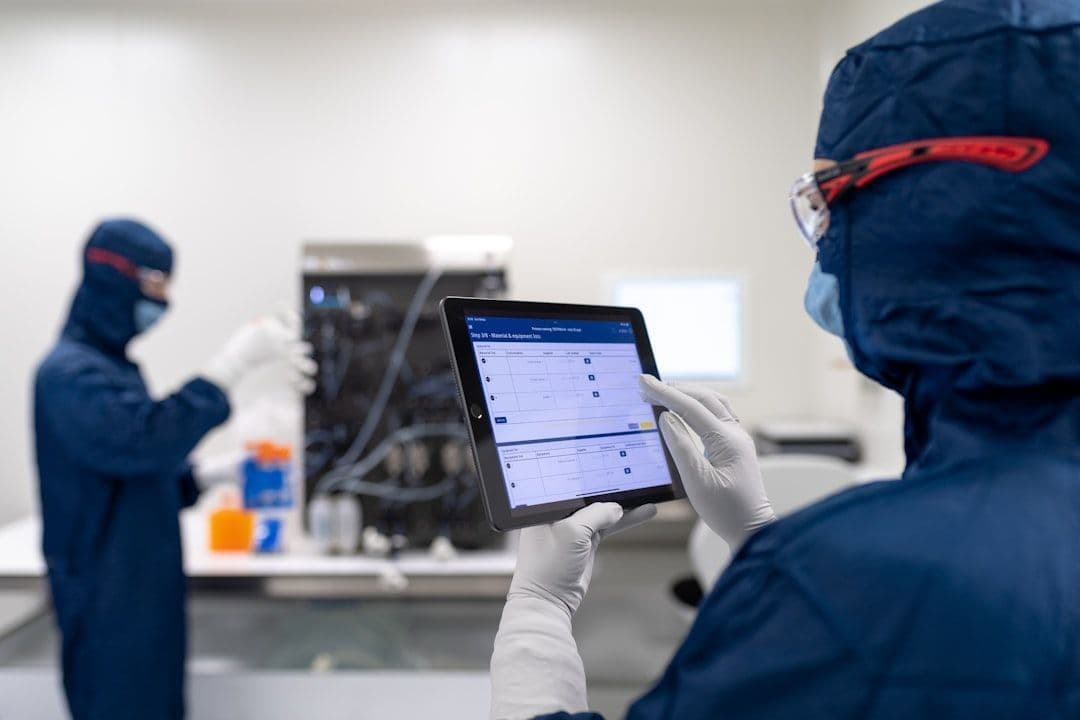
Mobile Accessibility: Can your technicians perform audits or sign off on tasks via a tablet on the lab floor? Mobile support is essential for real-time data entry.
Third-Party Risk Management: In 2026, you are responsible for your suppliers. Your software should help manage third-party audits and supply chain transparency.
Scalability: Can the software handle a doubling of your clinical programs? Some companies have successfully doubled their programs from 10 to 20 in just two years by using scalable digital tools.
Frequently Asked Questions about Pharma Compliance
How does compliance software ensure 21 CFR Part 11 adherence?
The software acts as a digital "lockbox." It ensures that every action is attributed to a specific user through secure authentication. Key technical controls include:
Time-stamped audit trails that cannot be edited or deleted.
Role-based access (RBAC) to ensure only authorized personnel can approve documents.
Encryption of data both at rest and in transit.
Validation support: Most modern vendors provide pre-validated "GxP-ready" environments to speed up the validation process.
What is the difference between eQMS and compliance software?
While the terms are often used interchangeably, there is a subtle difference. An eQMS (Electronic Quality Management System) focuses on the processes—how you manage documents, CAPAs, and training. Compliance software focuses on the mapping—ensuring those processes meet specific regulatory standards (like ISO 13485 or FDA 21 CFR).
The most effective platforms in 2026 are integrated solutions that bridge this gap. For example, Valkit.ai provides an AI-powered platform that doesn't just manage the quality process but automates the validation execution, ensuring that every step is compliant by design.
How long does it take to implement a compliance platform?
As mentioned in our timeline, a full rollout typically takes 8 to 12 weeks. However, you can see "quick wins" in as little as 2 weeks by digitizing SOPs and training. The timeline often depends on the quality of your existing data. If you are migrating 19 TMF studies from a legacy system, tools with smart migration features can handle this in about 72 days.
Conclusion: Future-Proofing Your Lab
The pharmaceutical industry in 2026 moves too fast for paper and spreadsheets. To stay competitive, labs must embrace automation. Pharmaceutical compliance management software is no longer just a "back-office" tool; it is a strategic asset that protects your revenue, accelerates your market entry, and—most importantly—ensures patient safety.
At Valkit.ai, we specialize in making this transition seamless. Our AI-powered digital validation platform is designed specifically for the pharmaceutical, biotech, and medical device industries. By leveraging smart automations and cloning tools, we help our partners:
Reduce validation costs by up to 80%.
Collapse validation timelines from weeks to mere hours.
Maintain a state of perpetual audit readiness.
Compliance doesn't have to be a burden. With the right tools, it becomes the foundation of your operational excellence.
Ready to see how we can transform your lab's compliance? Explore our Home page to learn more about our AI-driven approach.